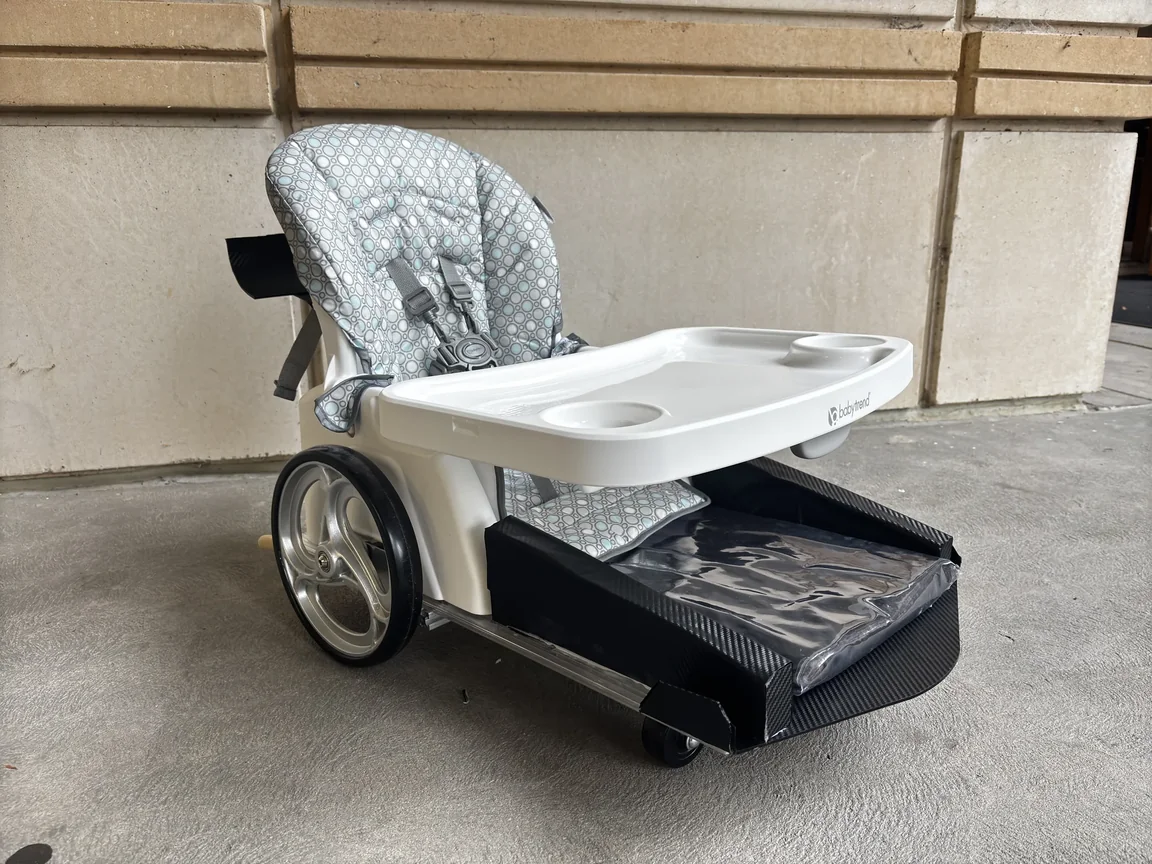
Product design · injection molding
Celebration of Imagination: a Happy Meal train
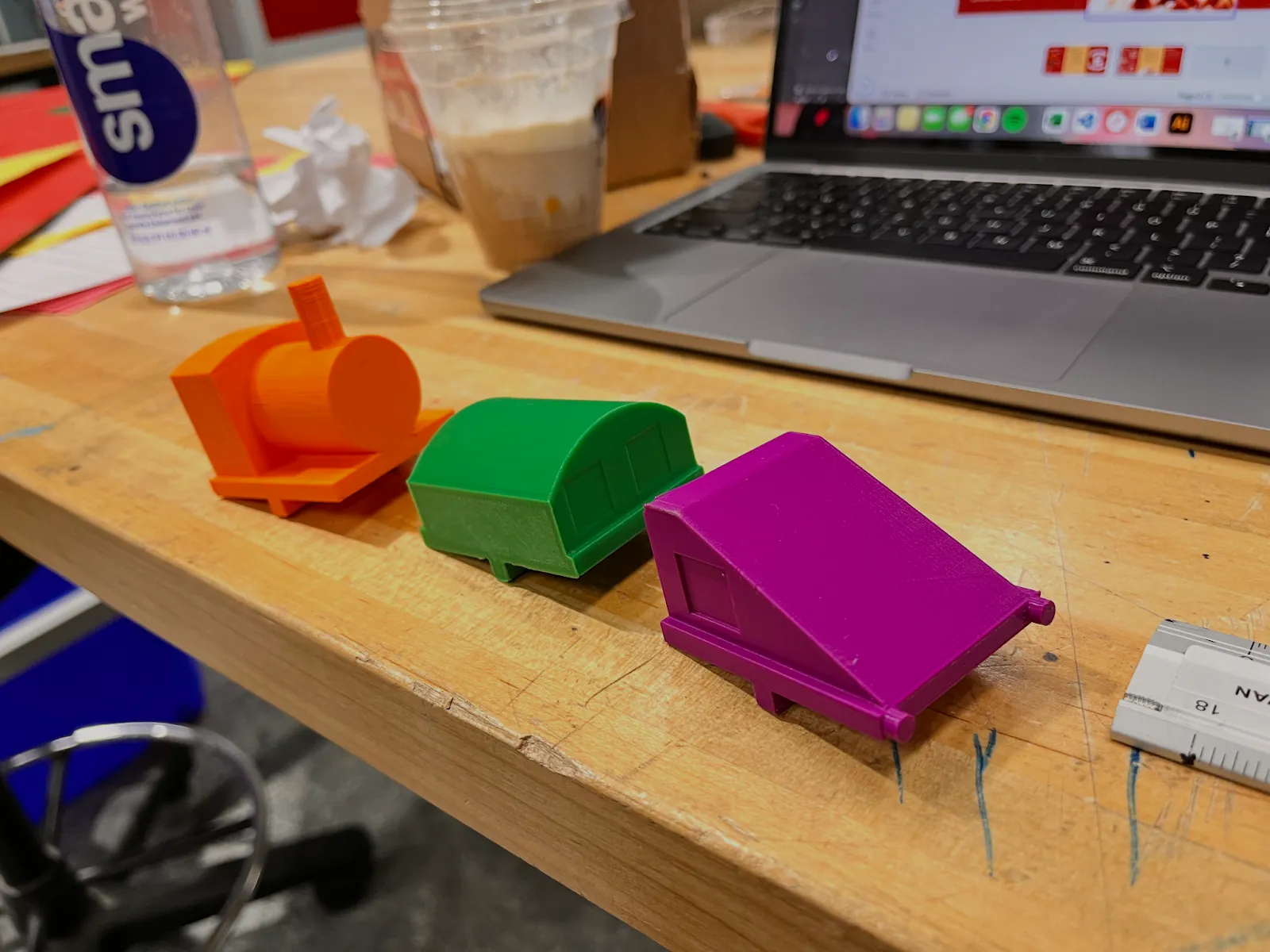
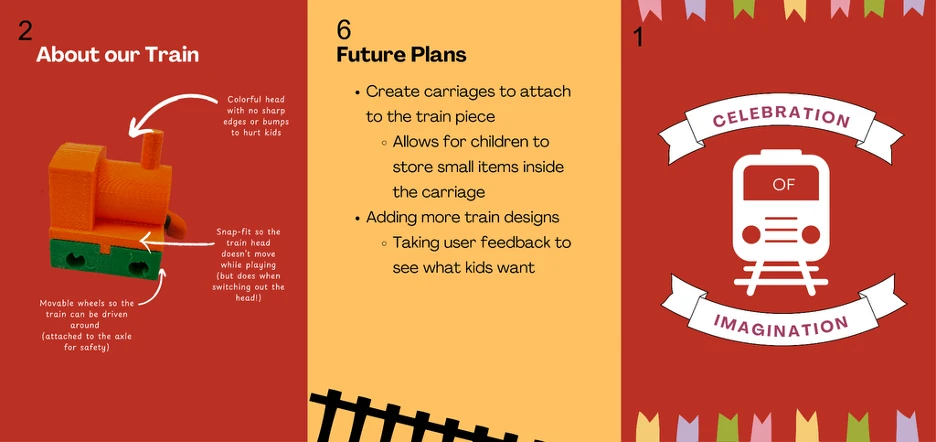
I modeled most of this Happy Meal train in Onshape. Kids swap the heads to build their own, and it costs $0.31 to make.
- Brief
- Injection-moldable, mass-producible Happy Meal toy
- Production material
- PETG (prototypes in PLA)
- Unit cost
- $0.31 in PETG
- Critical fit
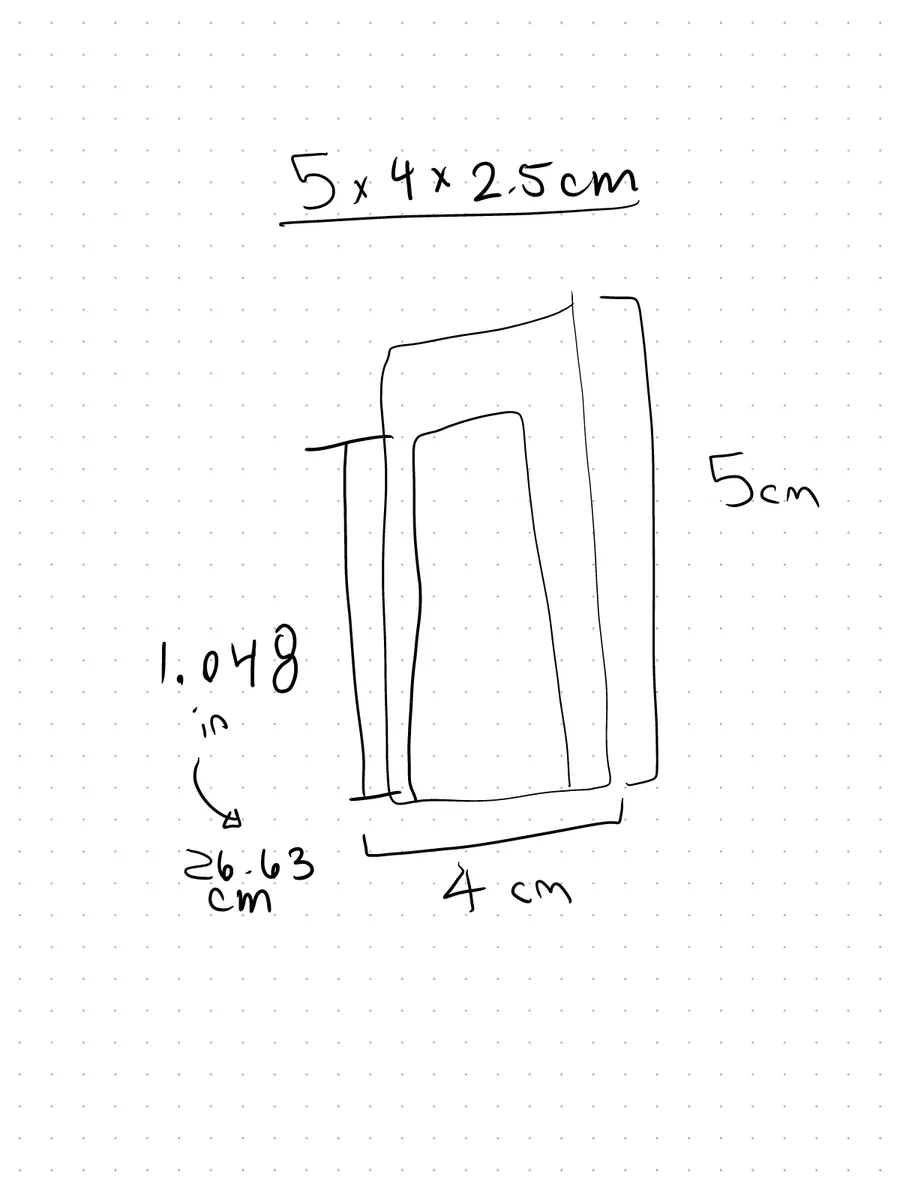
- Shaft collar bore ⌀10.11 ±0.01 mm on a ⌀10.16 mm axle
- Mate tolerance
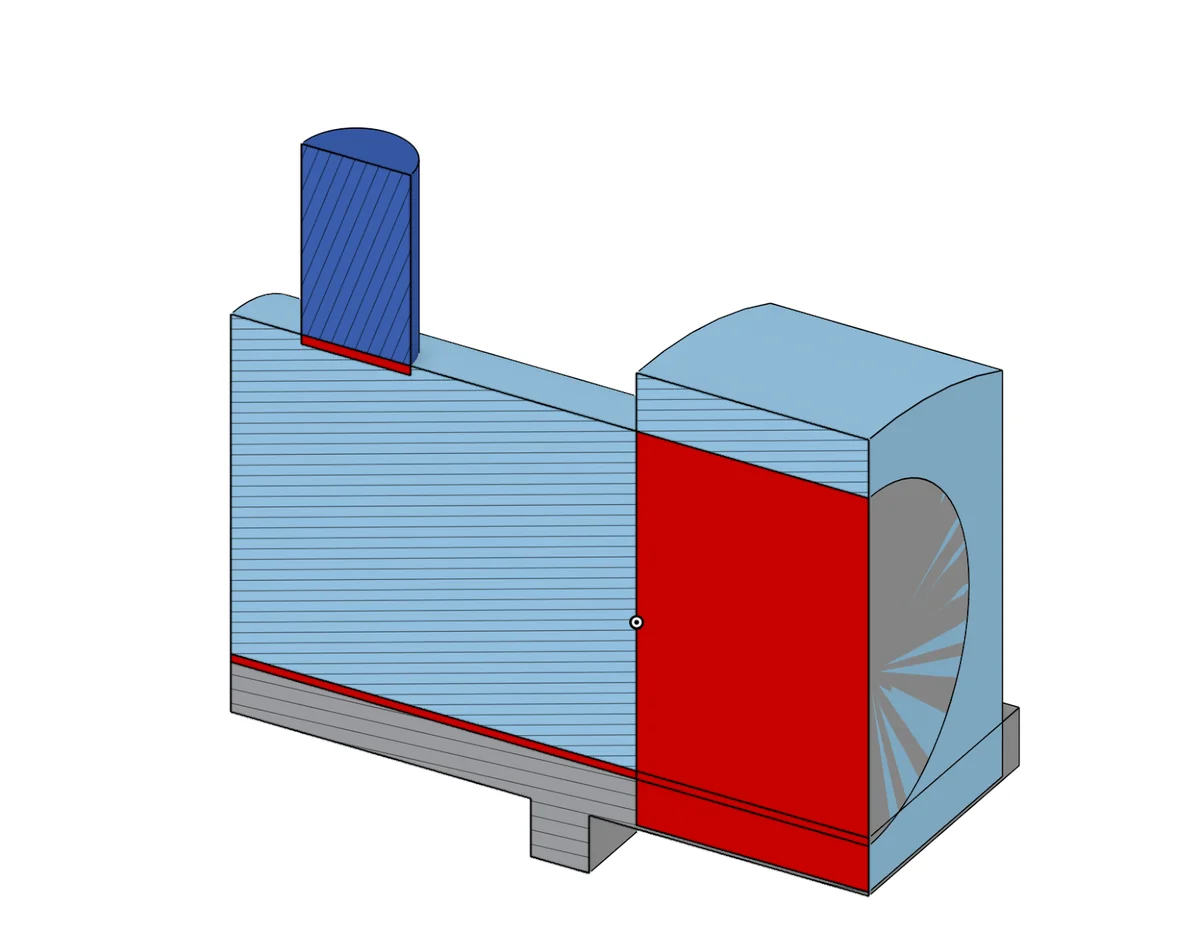
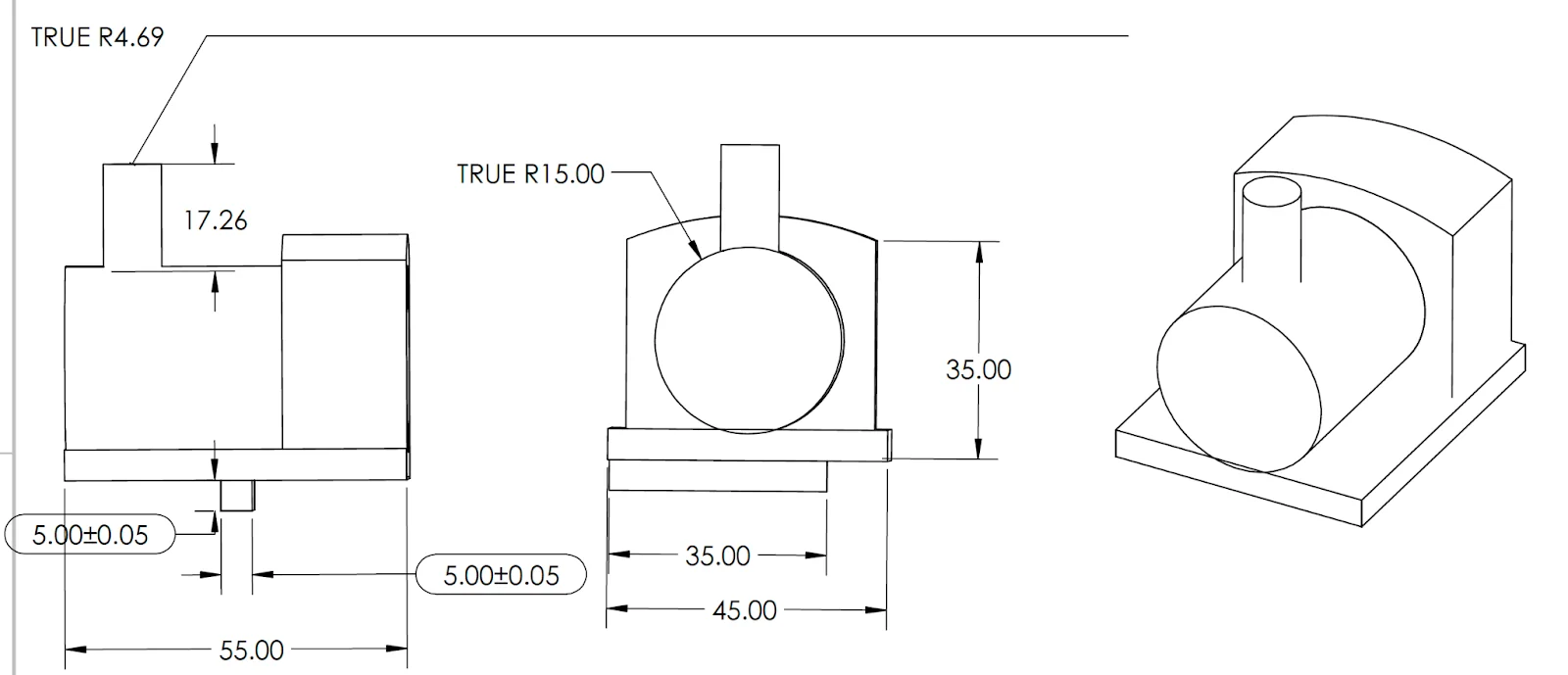
- 5.00 ±0.05 mm, head to chassis
- Safety
- Passes the 1.25-inch choke-tube test
01The brief
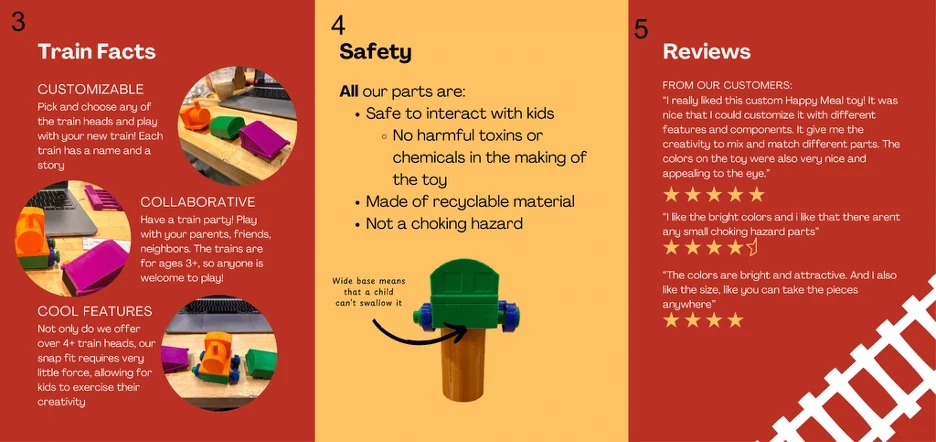
Design a McDonald's Happy Meal toy that is attractive and cheap, can be injection molded, and can be mass-produced. The memo to the client weighed practicality, sustainability, safety, cost, ease of use, and looks, and the toy had to be safe for children aged 4 to 8, which means nothing small enough to choke on, even after a child takes it apart.
02Who did what
Three-person team with Saina Srivastava and Mariangle Mendez, all three of us working as engineers. I modeled most of the toy in Onshape. We brainstormed, scored concepts, and 3D-printed prototypes together, and co-wrote the technical memo. For the Duke 2025 Toy Fair, I made the toy's video.
03From jet to train
Brainstorming started wide; an early favorite was a carrier jet with Toy Story soldiers. We narrowed the field with a weighted Pugh matrix that favored price above everything else, and the plain train won.
- Weights
- Price 0.40 · Fun 0.30 · Safety 0.15 · Durability 0.15
- Train
- +0.55, selected
- Train with carriage
- −0.10
- Plane
- −0.55
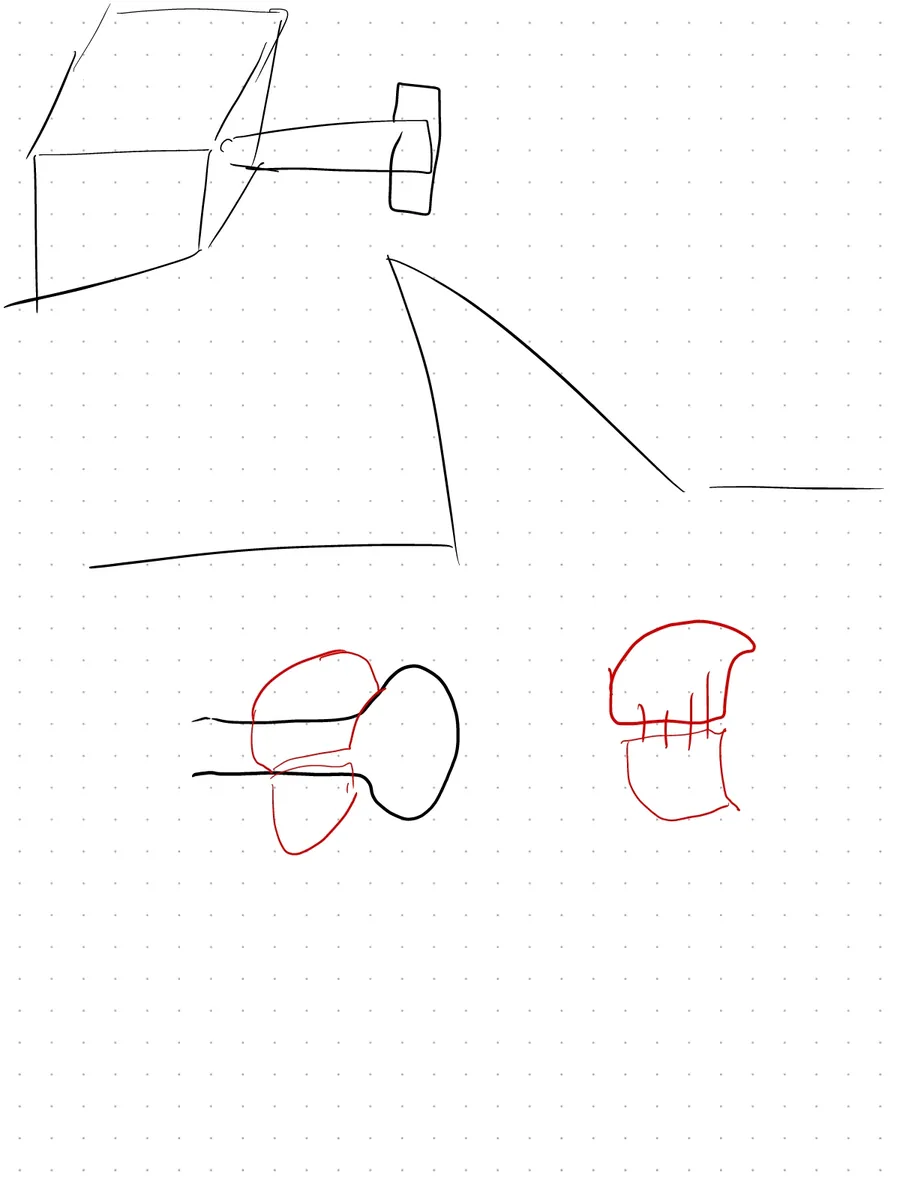
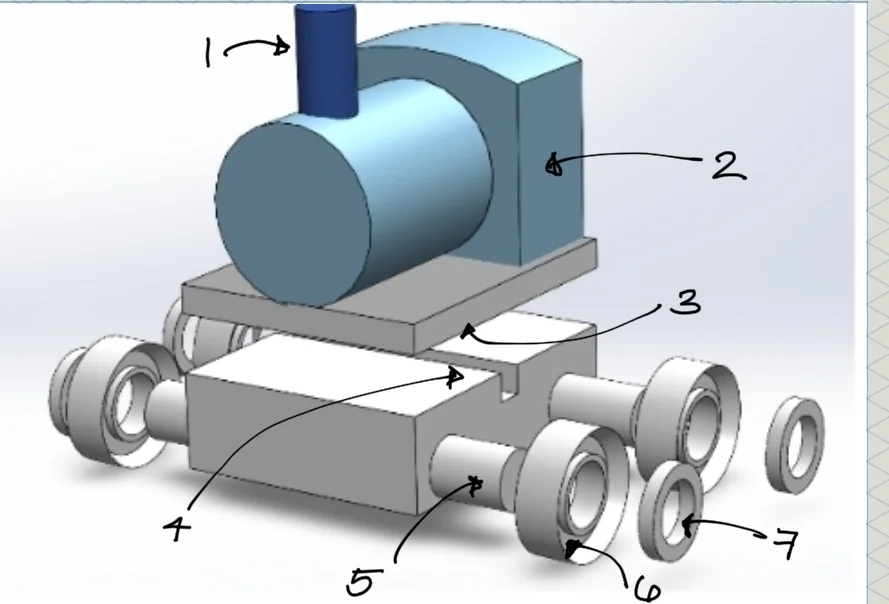
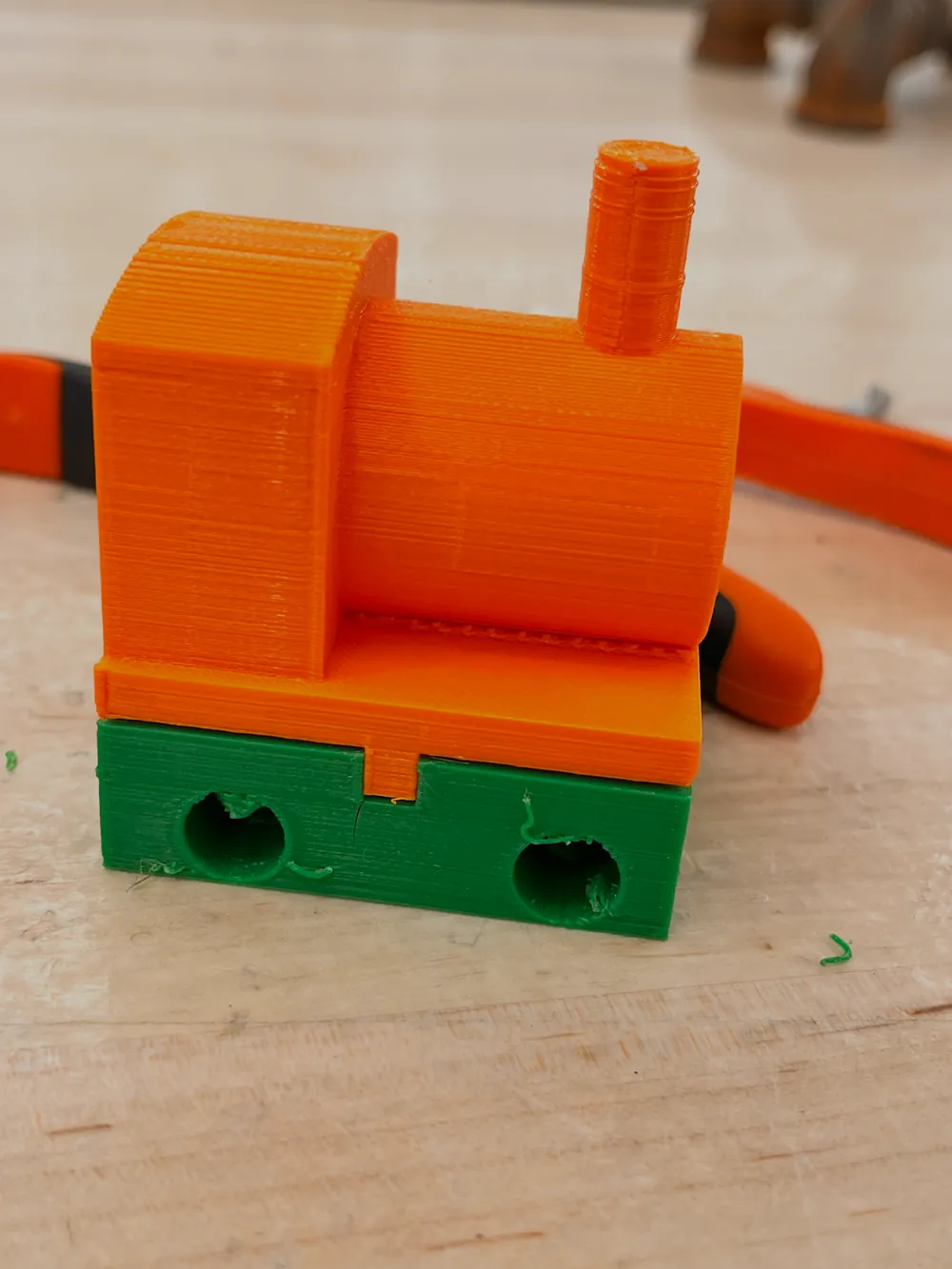
We split the train into a head, a chassis, and wheels. The head slides onto the chassis along a horizontal male/female mate, so it can't pop off upward during play but a child can swap it with little force. Shaft collars press onto the axles so the wheels can never come off. Every part extrudes along one axis to keep it injection-moldable, and the head and chassis are solid so they survive drops.
Our first prints didn't fit. The 3D printers hold about 0.1 mm, looser than the fits we had designed, so the head and chassis mated badly. We opened up the tolerances in the CAD for the printed prototypes, and because we had started CAD early, there was time to reprint.
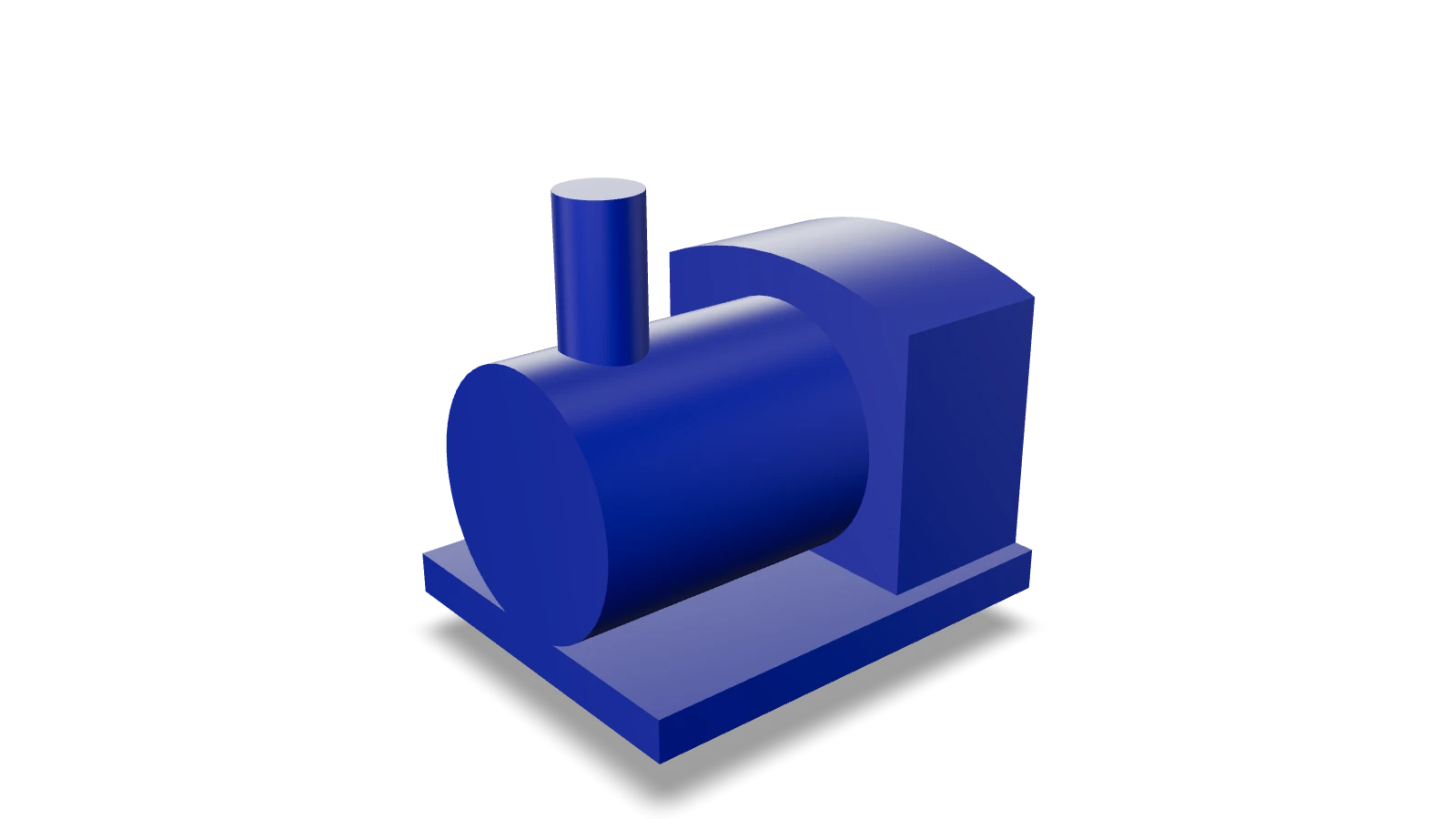 Interactive 3D · 6 KB
04Choke tests and cost
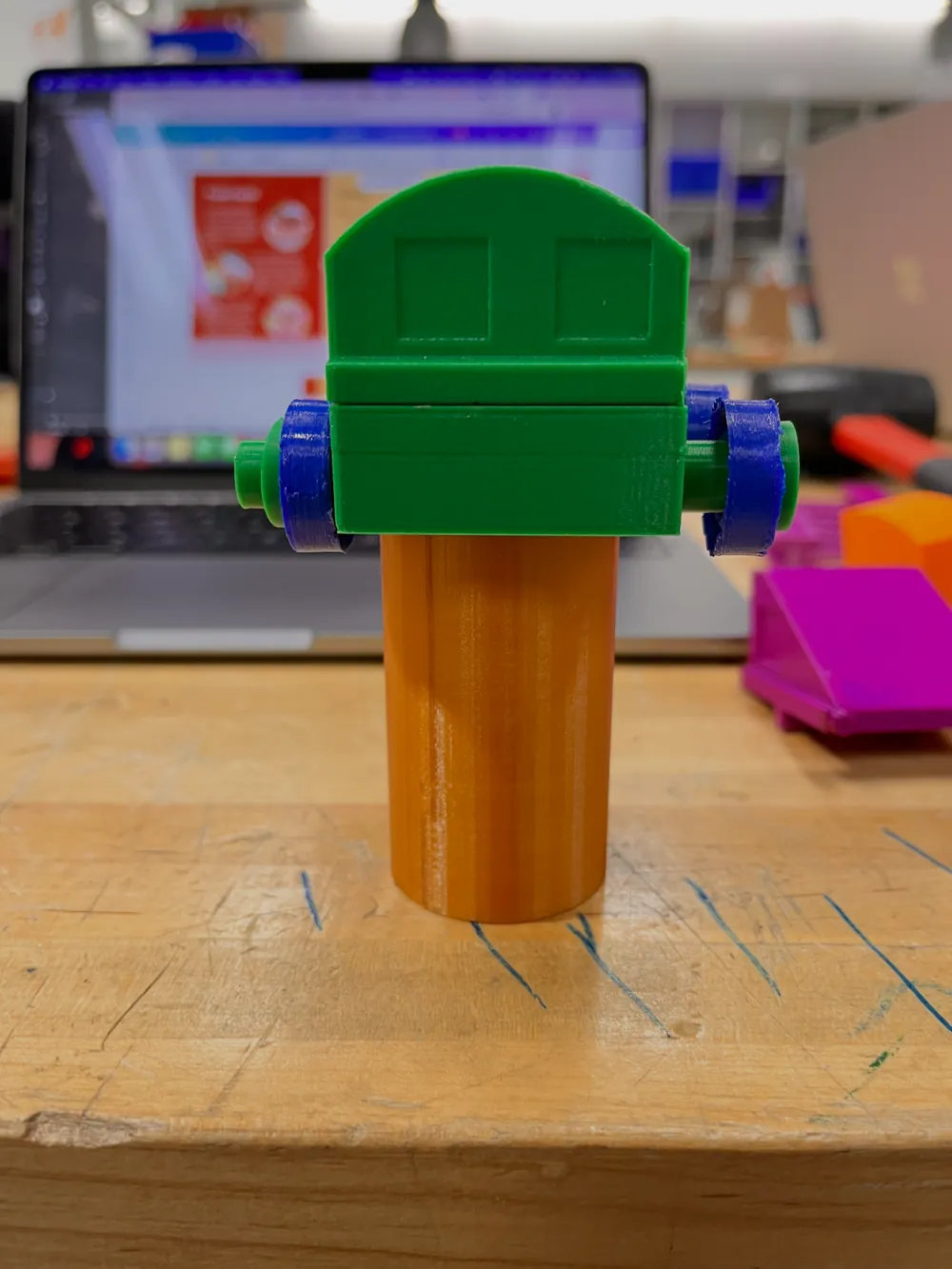
Every detachable piece passed the choke-tube test in every orientation. The train is modular: three heads (standard, subway, and bullet) share one mate, so kids can swap them onto the chassis and rebuild the train however they like, and they work as collectibles. We only built three, but any new head drawn on the same mate would fit, so there's really no limit to how many designs there could be. In production PETG, the toy comes to $0.31 a unit, with one 100-ton press per head design running 100,000 units a week. We presented it at the Duke 2025 Toy Fair.
We put the tightest tolerance where safety needed it. The shaft collar bore is ⌀10.11 ±0.01 mm on a ⌀10.16 mm axle, a press fit that keeps the wheels on for good. The head mate is looser, at ±0.05 mm, since kids are supposed to pull the heads off.
05Looking back
Starting early saved us. We had most of the CAD done before spring break, so when the first prints didn't fit we still had time to fix the tolerances and reprint instead of settling. I also liked how much that one mate did for us: it keeps the head on, lets kids swap it, and it's still easy to injection mold.