Team systems design · 2021–24
Space settlement design
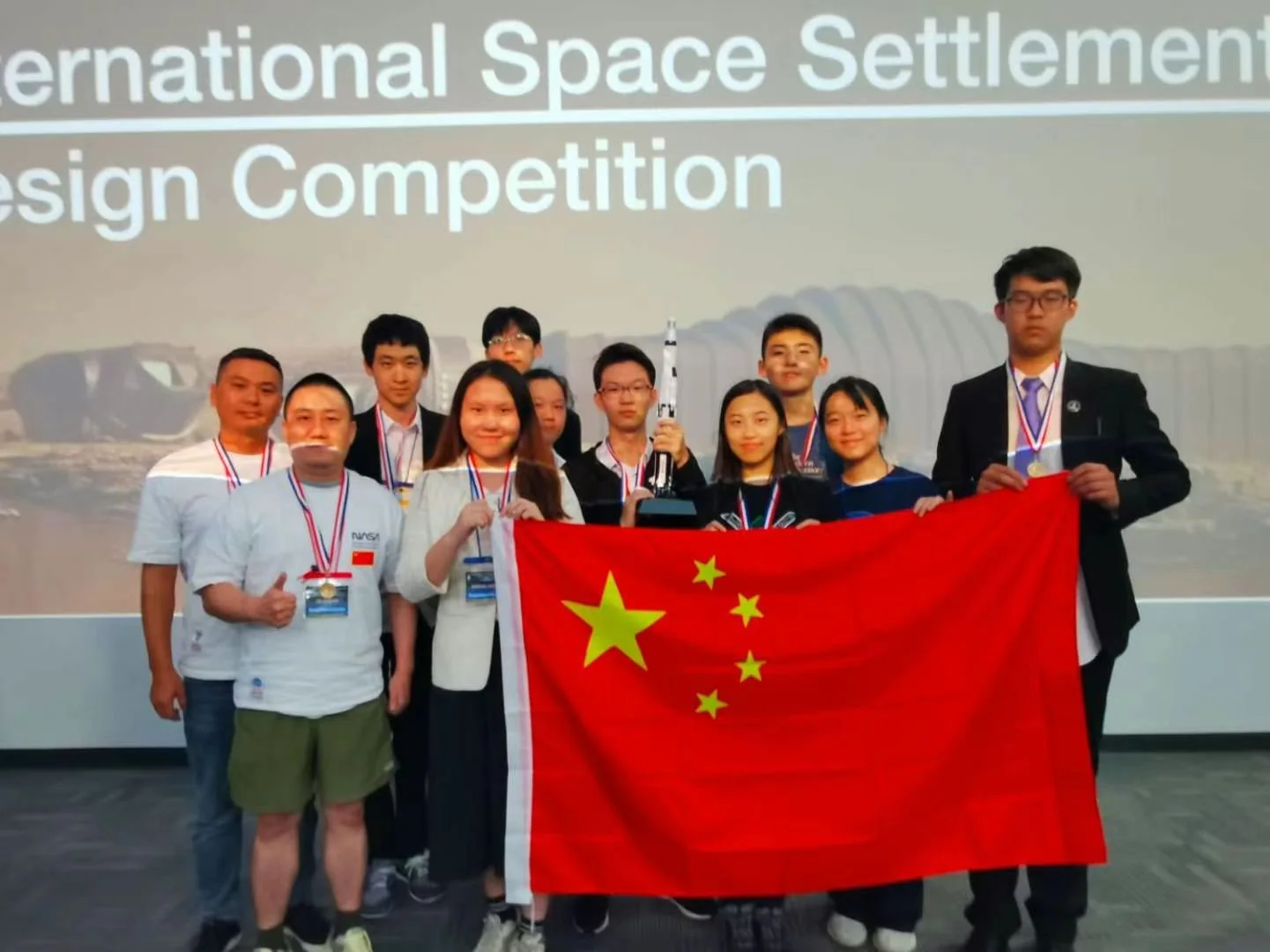
I designed space settlements against the clock for three years, and my company won the 2023 Global Finals at Kennedy Space Center.
- Result
- Global Champion, 2023, Kennedy Space Center
- Also
- Asia Regional Finals twice; Best Representor, China Finals 2021–22
- Format
- Assigned team answers a request for proposal (RFP) in 24–48 hours
- Judges
- Former NASA engineers
01How ISSDC works
ISSDC works a lot like a real aerospace proposal. You're put on a team with students you've often never met, you get a request for proposal, and you have 24 to 48 hours to design a whole settlement and present it to judges, many of them former NASA engineers.
02What was mine
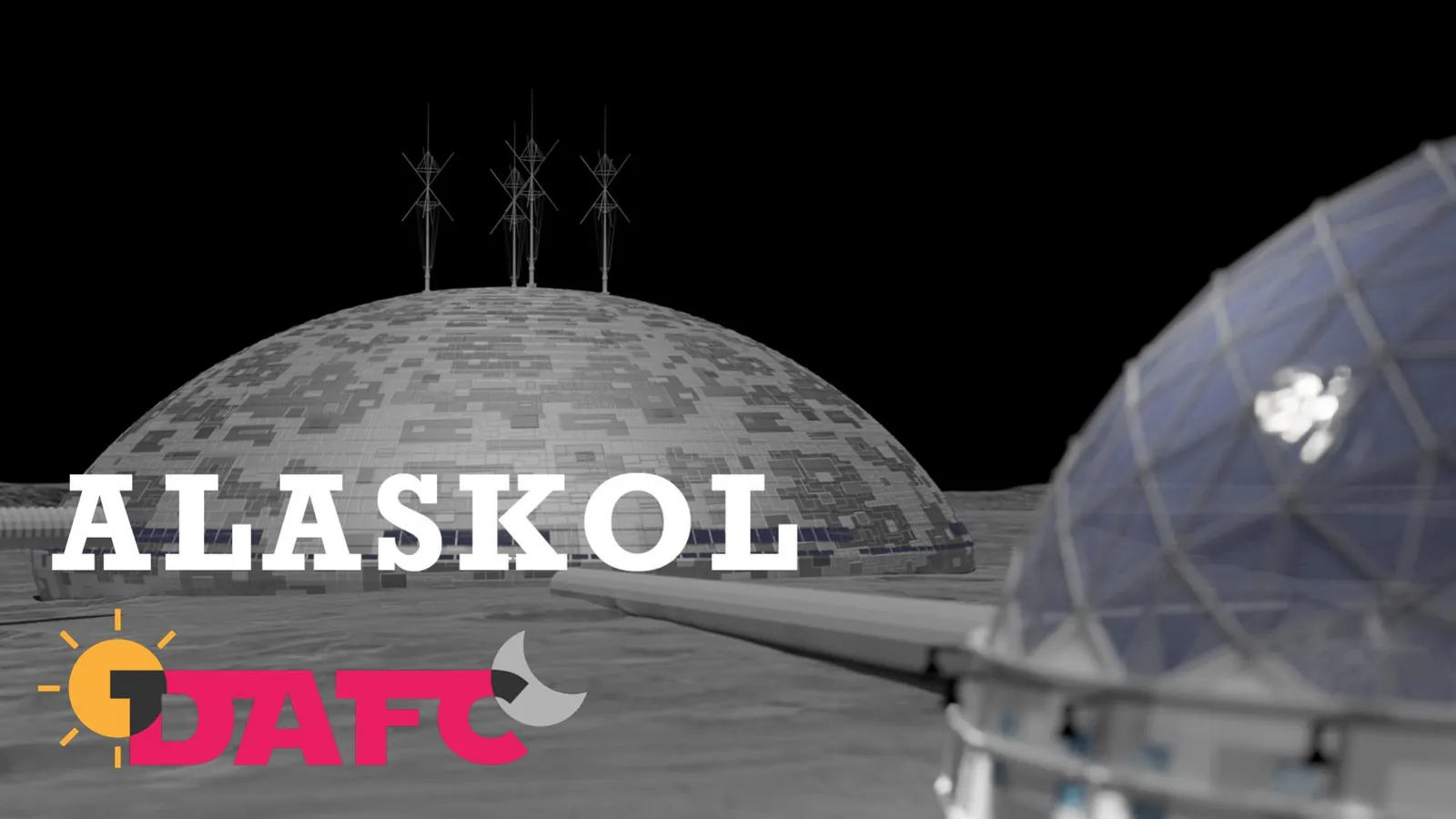
On Bellevistat, Team Bread's proposal for the 30th ISSDC (2022–23), I designed nearly all of the operations and infrastructure section, including its construction and repair robots. On Alaskol, DAFC's lunar settlement and the winning design at the 2023 Global Finals, I designed the atmosphere's gas mix. I also built the team's design database and documented team strategy, which later teams worked from.
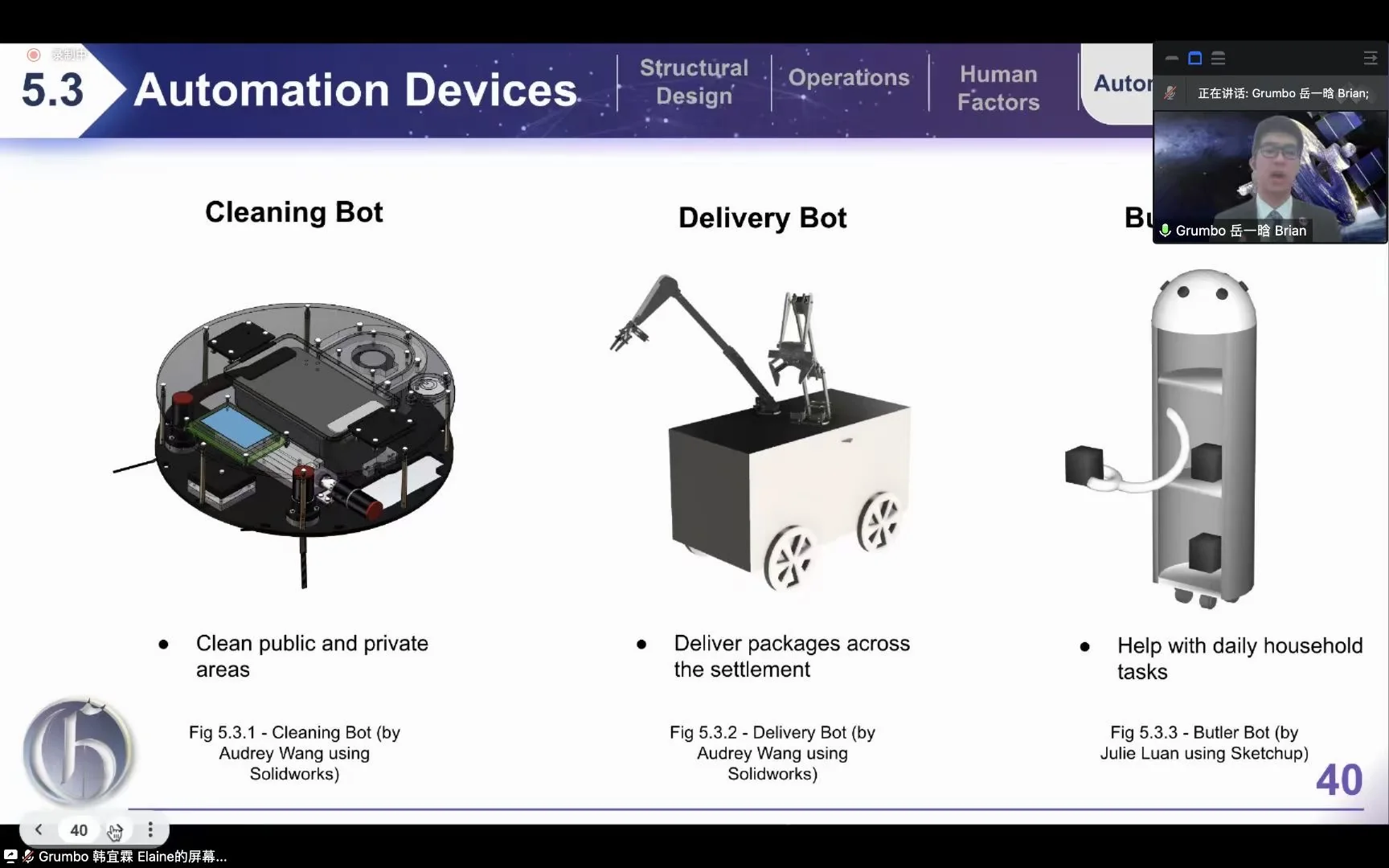
Not mine: on Bellevistat, the structural, human factors, automation, and schedule and cost sections, though I added tables and figure labels to some of them; Kelly Wang built the 3D models of my robots. On Alaskol, everything but the gas mix, including the residential season calendar.
03Robots and air
Bellevistat is an orbital settlement for 7,850 people, built mostly by assembling prefabricated modules in orbit. I designed the robots that do that assembly. Looking back, I went at them the way I'd go at hardware now: start from something you can buy, then design around it.
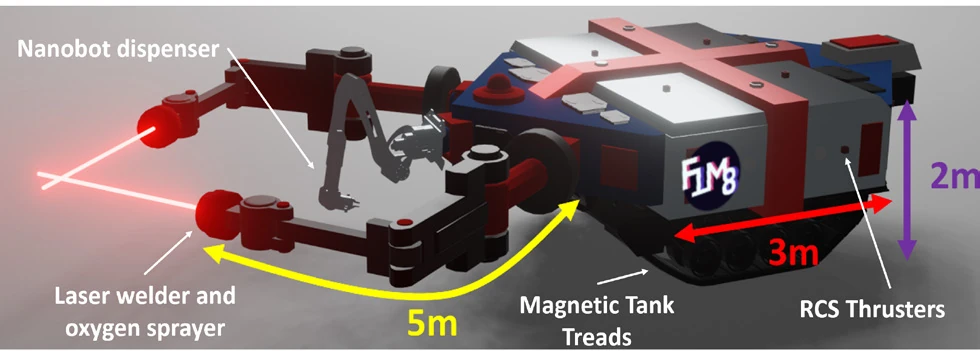
The base is the F1M8, a multipurpose industrial robot offered by one of the competition's vendors, so effectively a COTS part. I configured it as a dual-mode welding robot: it flies in zero gravity on RCS thrusters and crawls along the hull on magnetic tank treads, so it only spends propellant when it has to. It carries two laser welders, each with an oxygen sprayer so the weld works in vacuum, and a magnetic clamp holds the two sections together while it welds. The robots ship as modules with magnets on their mating faces and assemble themselves on arrival.
Once construction ends, the same fleet becomes the settlement's ship-repair service. Swapping parts turns each robot into one of three types, eleven of each per fleet: cutting bots that remove damaged modules from a docked ship, grabber bots that fetch spares from cargo and hold them in place, and welding bots that attach them. Repurposing the construction fleet instead of building a second one kept the cost down.
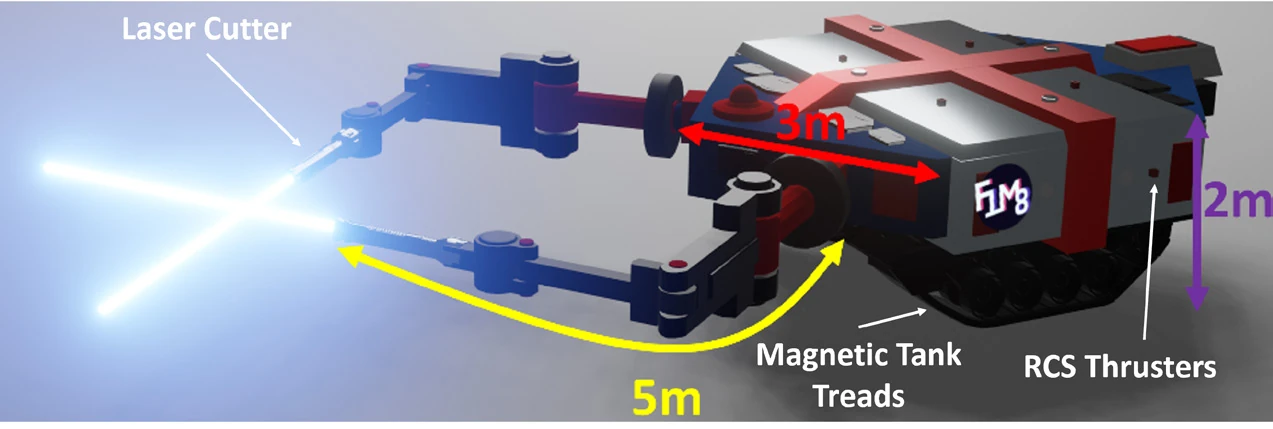
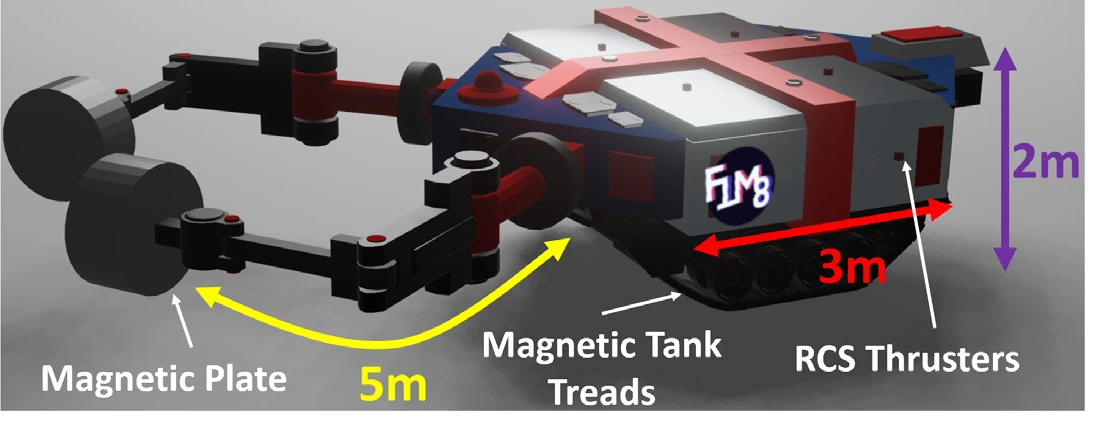
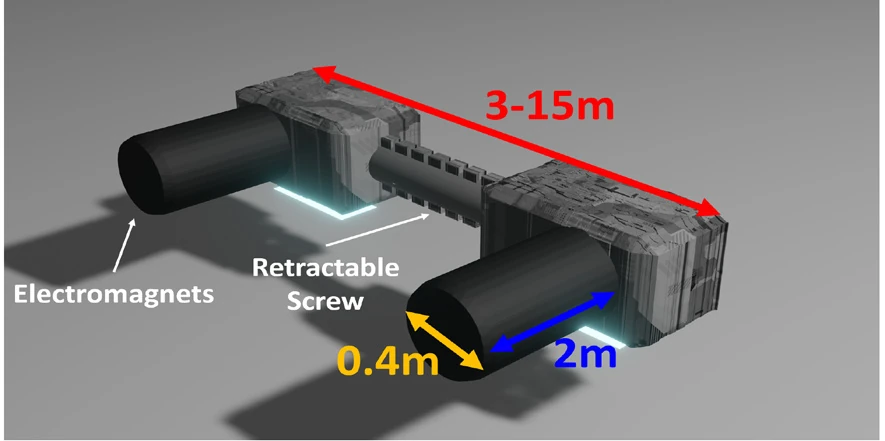
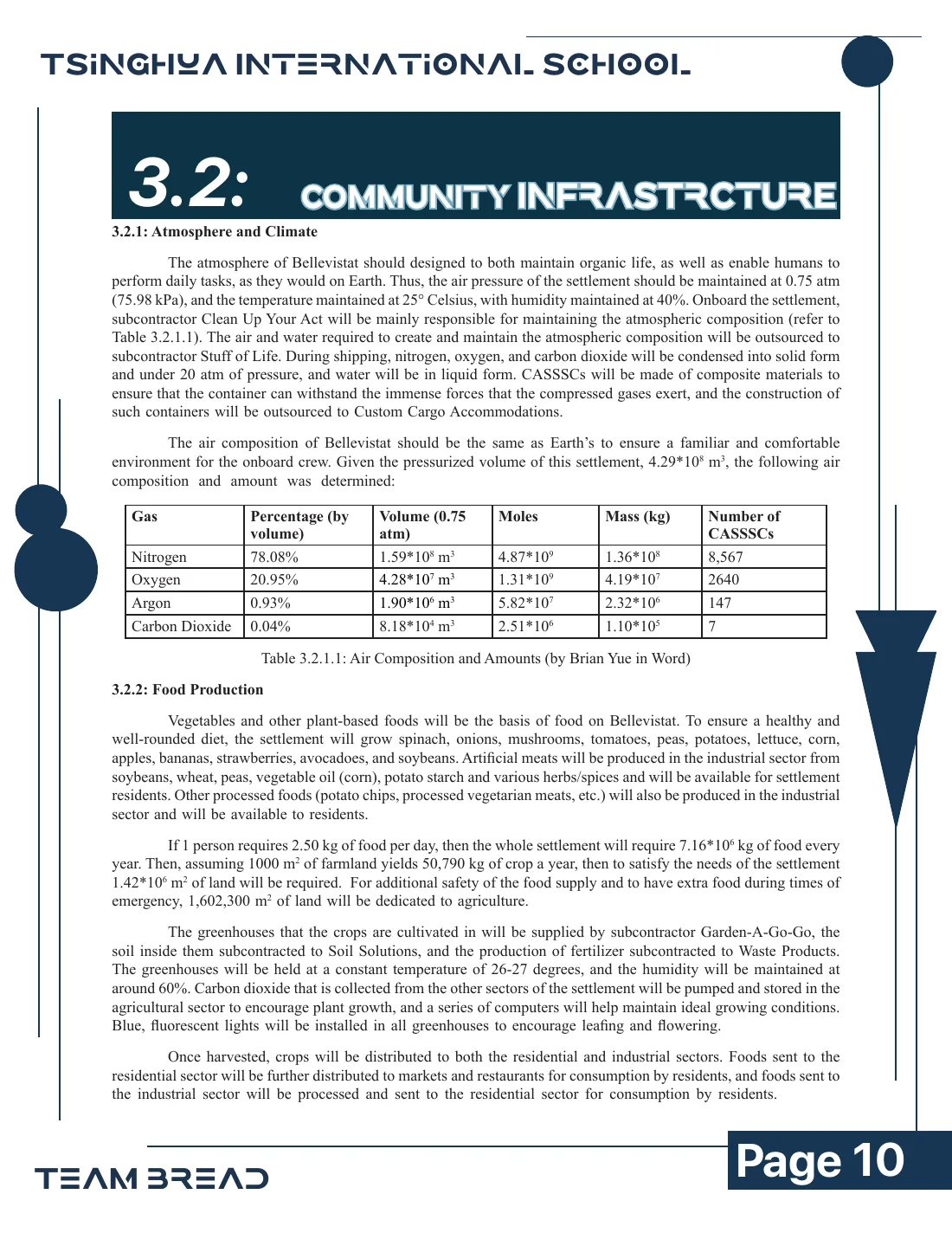
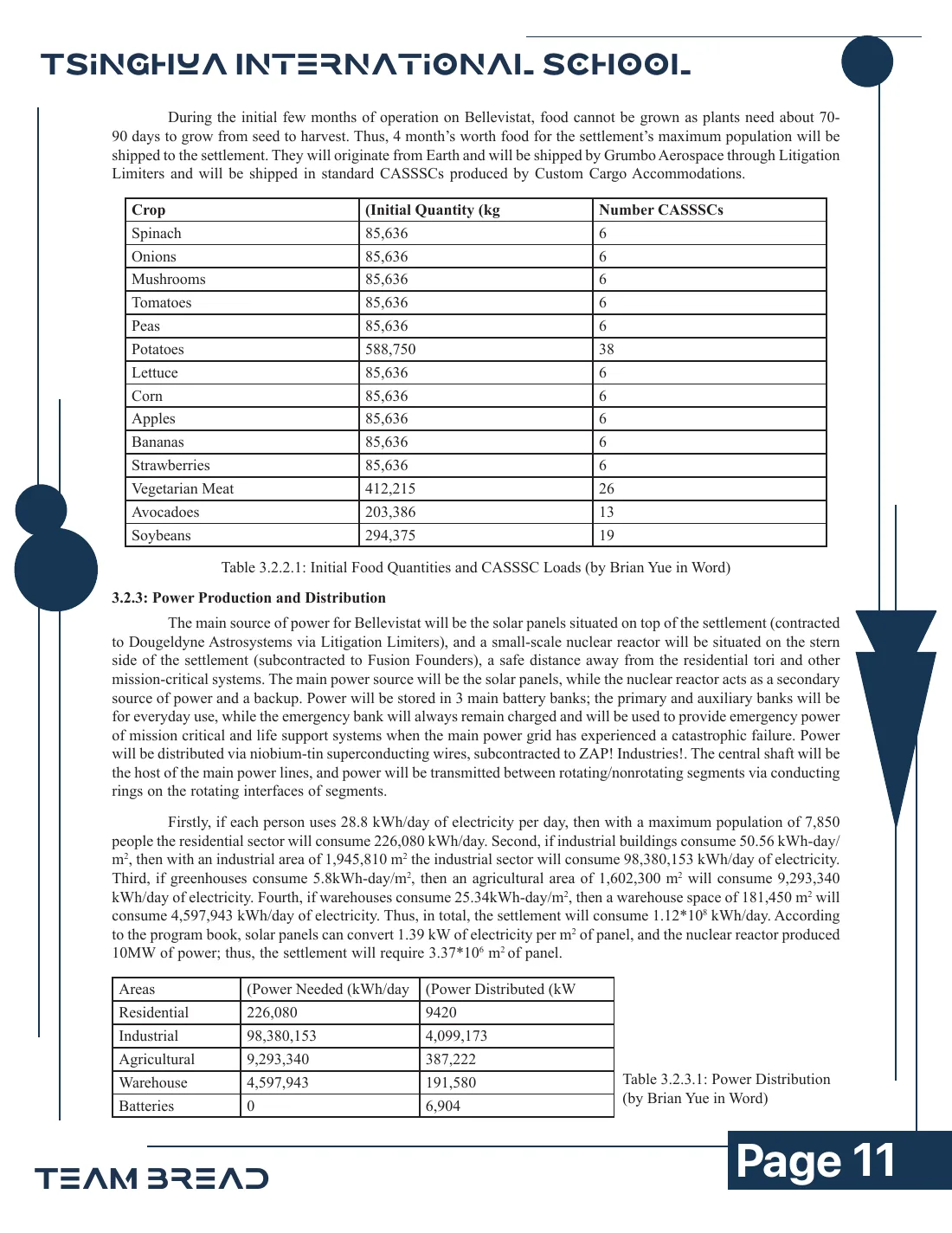
I also sized the settlement's life support and power from per-person and per-area assumptions:
- Air: an Earth-normal mix at 0.75 atm across 4.29 × 10⁸ m³ of pressurized volume, which works out to roughly 11,400 cargo containers of gas.
- Power: 1.12 × 10⁸ kWh per day, summed from residential, industrial, agricultural, and warehouse demand, met by 3.37 × 10⁶ m² of solar panels with a reactor as backup. The panel area uses the competition program book's figure of 1.39 kW of electricity per m² of panel.
Rechecking that power figure now: 1.39 kW per m² is about all the sunlight that reaches a panel near Earth, so it assumes the panels convert nearly all of it. At a realistic 30% efficiency the same load needs about 1.1 × 10⁷ m², roughly 3.4 times the area. That's the check I'd run now before using a number someone hands me.
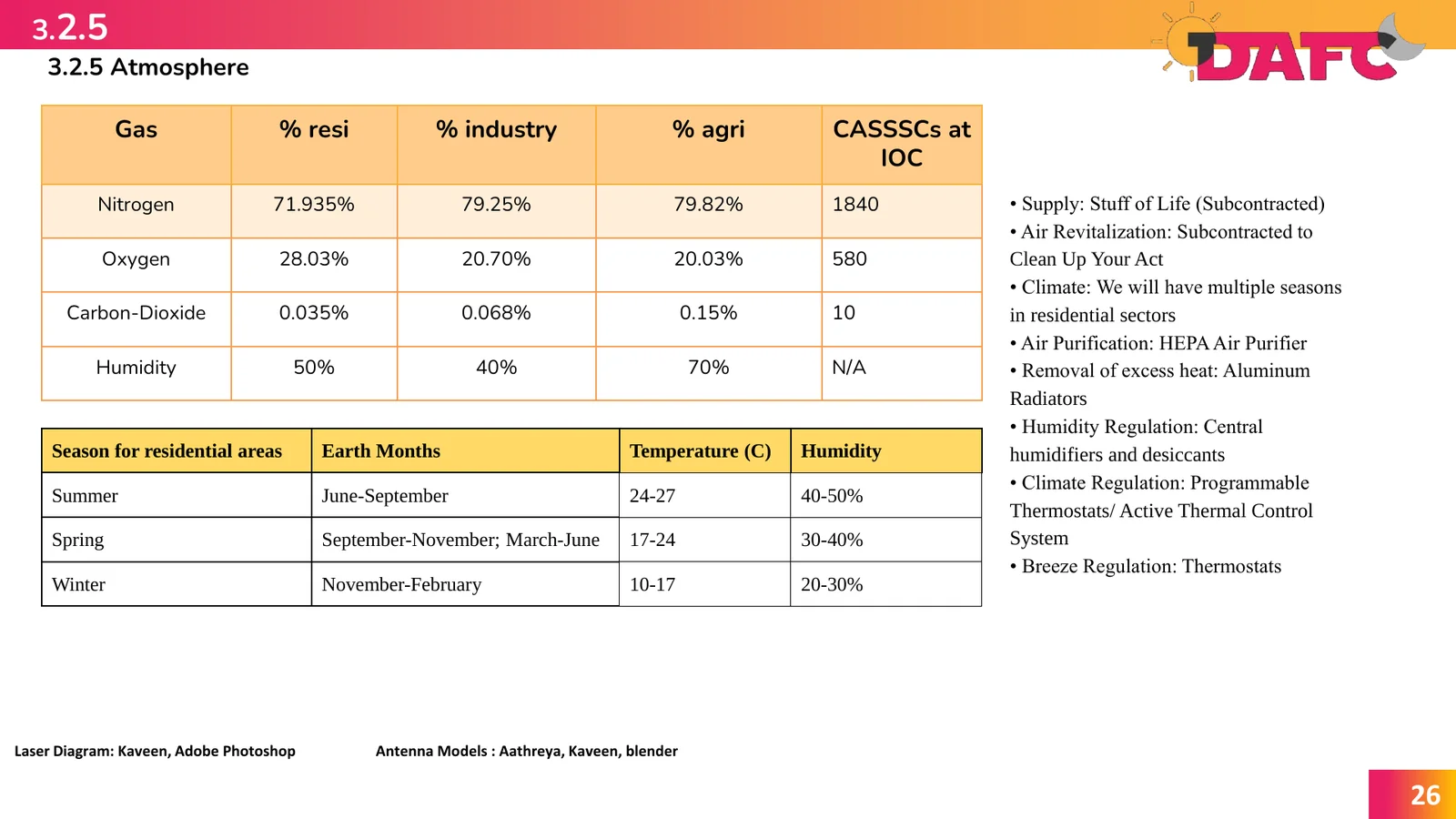
Alaskol sits on the Moon next to mining operations. I gave each sector its own gas mix, and every number had a reason I had to defend:
- Residential: 28% oxygen, to make physical labor easier, at 50% humidity.
- Industrial: oxygen down to 20.7% and humidity down to 40% to slow oxidation, but not bone-dry, because some moisture prevents static buildup.
- Agricultural: carbon dioxide raised to 0.15% to help plants grow, but held below the level that would start acidifying the soil, at 70% humidity.
One gap I'd close now: the slide gives the mix but not the total pressure, and 28% oxygen only makes sense with one. At sea-level pressure it's a fire risk. At a reduced cabin pressure it's the right call, because it holds the oxygen partial pressure near Earth's: 28% of 0.75 atm is 0.21 atm, the same as sea level. I'd state the pressure first.
04Kennedy Space Center
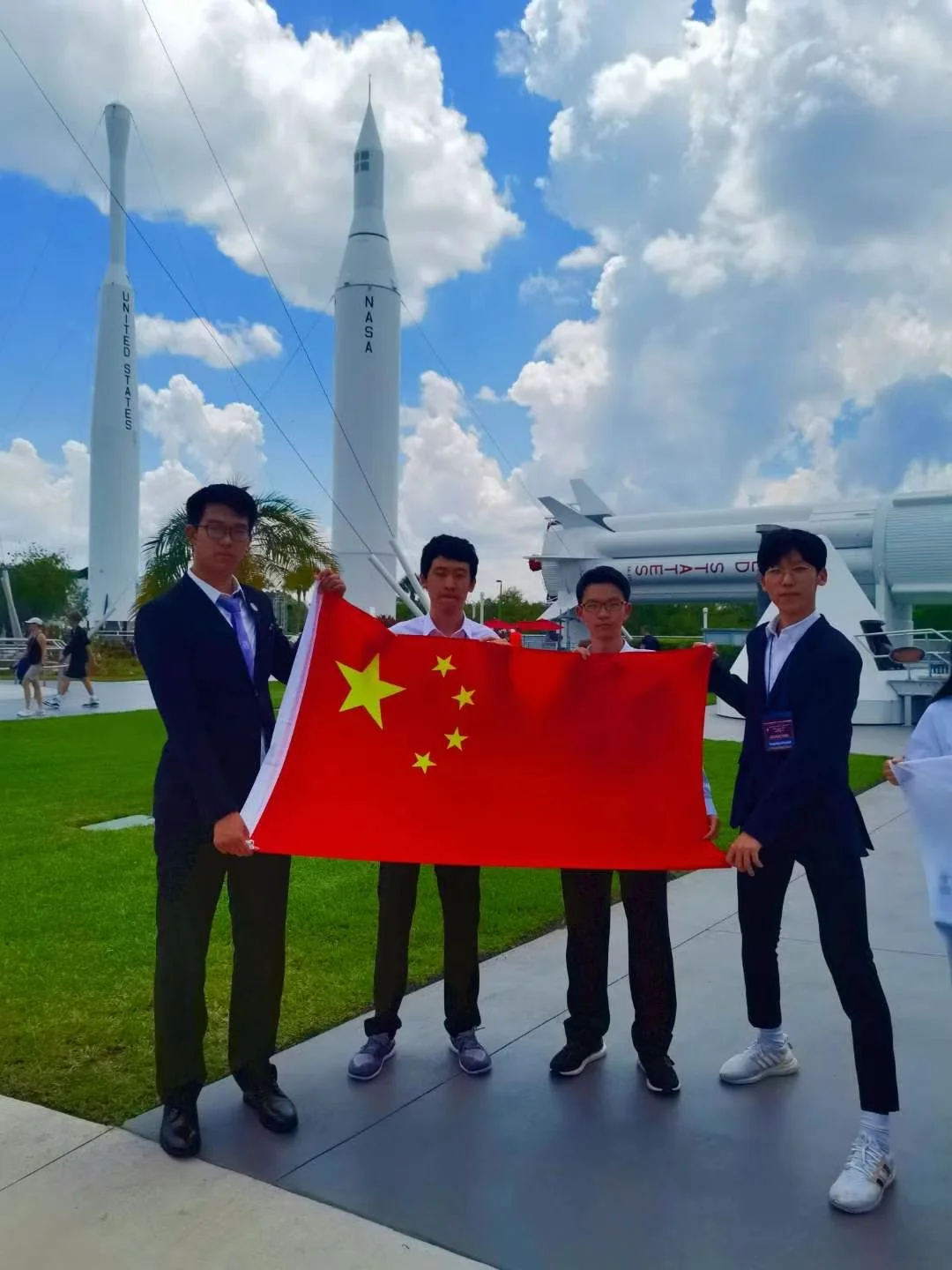
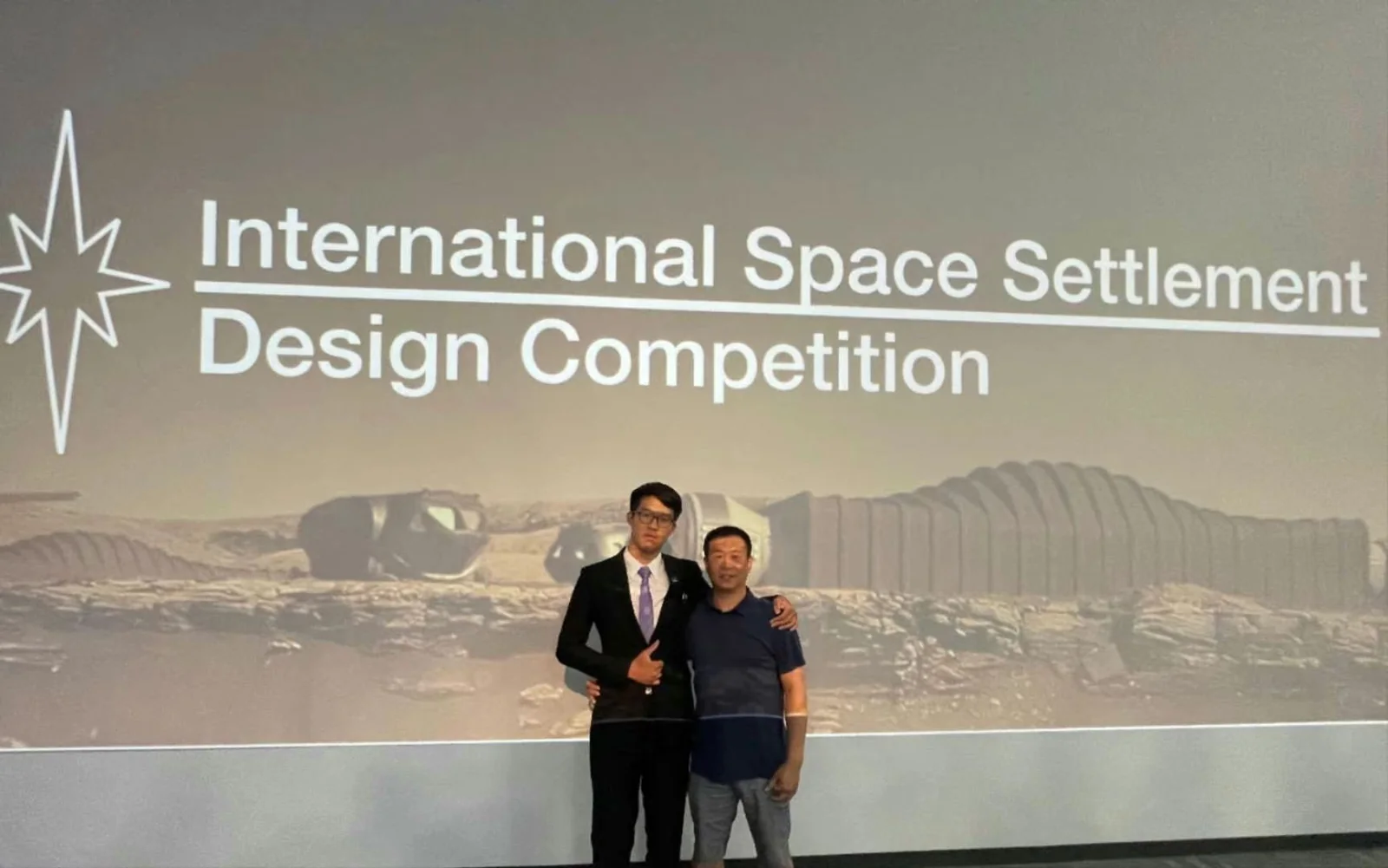
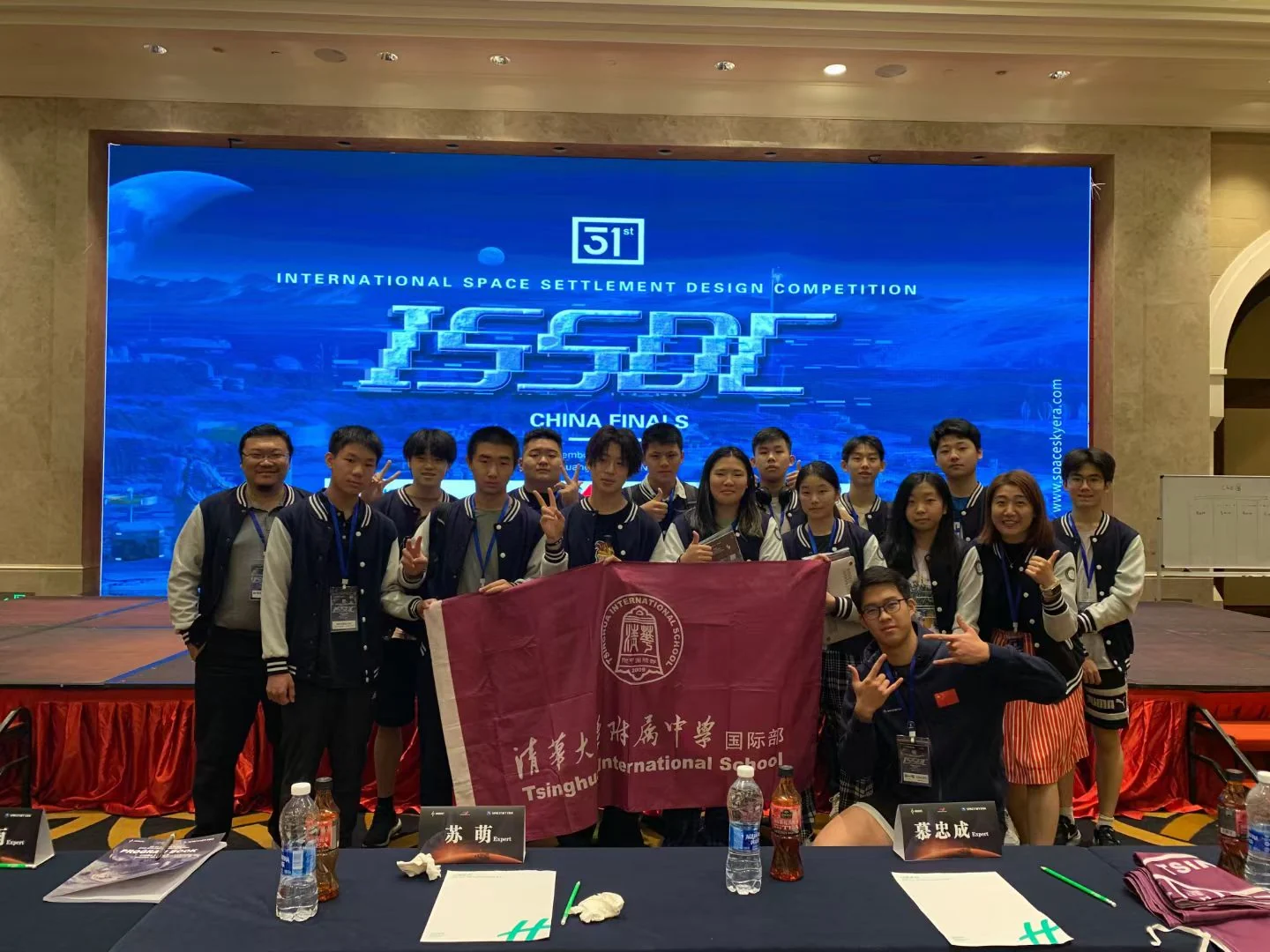
I led a team to the Asia Regional Finals twice, was invited onto the Chinese national team for the 2022–23 Global Championship, and was named a Global Champion at Kennedy Space Center. After aging out as a competitor, I came back as a student advisor, and in November 2023 the ISSDC China organizing committee brought me on as a co-CEO for the China Finals: I co-managed one of the competing companies, taught its students STEM topics, and coached them on presenting.
05What it taught me
You hand off work and trust it comes back, and you decide fast which parts of the problem are worth the time you have left. That carries straight over to engineering.
The Global Finals gave us 24 hours to design and present a moon base. Under that deadline, with no sleep, it would have been easy to lift designs from NASA and other legacy projects and present them as ours. I wouldn't, and pushed for our own work instead. Every design decision had to be ours, and defensible.
Alaskol's gas mix is where that stuck. I was drilled on every one of those numbers: why more oxygen where people live, why any humidity at all in a factory, why stop the carbon dioxide at 0.15%. It taught me to justify every design decision I make.